
Clapham Old Town estate removals checklist for flats
Posted on 08/08/2026
Clapham Old Town Estate Removals Checklist for Flats
Moving out of a flat in Clapham Old Town sounds simple until the details start stacking up. Narrow stairwells, time slots, lift bookings, parking restrictions, landlord check-outs, and that one awkward sofa that only just fitted in when you moved in. The good news? A well-built Clapham Old Town estate removals checklist for flats cuts through the chaos and gives you a calm, sensible plan.
This guide is written for real flat moves in and around Clapham Old Town: leaseholders, tenants, shared-house residents in conversion flats, and anyone trying to move without irritating the neighbours before 8 a.m. or discovering, at the worst possible moment, that the mattress will not make the turn on the landing. We'll cover what the checklist should include, why it matters, how to use it, and where people most often go wrong. If you want broader service context while you plan, you may also find the flat removals Clapham page useful alongside this article.

Why Clapham Old Town estate removals checklist for flats Matters
Flat moves are different from house moves in all the ways that matter. You often have less space, less storage, more shared access points, and more people affected by a few hours of activity. In Clapham Old Town, that can mean period conversions, mansion blocks, modern apartment buildings, and estates where access rules are taken seriously. One missed detail can throw the whole day off.
A good removals checklist does three things at once. It keeps your own move under control, it protects the building and common areas, and it helps the removal team work quickly without guesswork. That matters because delays in a flat move are rarely small. A late key handover, a missed parking bay, or a forgotten lift booking can snowball into extra stress very quickly. And honestly, nobody needs that by lunchtime.
There's also the emotional side. A checklist takes the pressure off your head. Instead of trying to remember everything while boxes are being taped and phone notifications keep pinging, you simply follow the plan. One job at a time. It feels a bit boring, maybe, but boring is good on moving day.
How Clapham Old Town estate removals checklist for flats Works
The checklist works by breaking a flat move into clear phases: pre-move planning, building coordination, packing, moving-day execution, and after-move checks. That structure is especially useful in flat blocks, where the logistics around access, neighbours, parking, and lift protection matter as much as the packing itself.
In practical terms, you begin by checking the lease, tenancy agreement, or building rules. Then you confirm what the building expects on move day. Some blocks want advance notice, some require lift protection or floor coverings, and some limit moving hours. If you are using a professional crew, it helps to pair the checklist with a service such as removal services in Clapham or man and van Clapham, depending on the scale of the move.
From there, the checklist becomes your working document. You use it to assign tasks, confirm dates, and make sure nothing gets left until the last minute. It is not glamorous, no. But it is exactly what prevents the classic moving-day scramble where someone is still looking for passport documents while the van is already outside.
Key Benefits and Practical Advantages
The biggest benefit is control. Flat removals in Clapham Old Town often involve more moving parts than people expect, and a checklist lets you deal with them before they become problems.
- Fewer delays: You know what must be done before the van arrives.
- Better building compliance: Lift bookings, access codes, and move-in rules are sorted early.
- Less breakage: Fragile items are packed properly instead of being rushed at the end.
- Smoother team coordination: Everyone knows what is happening, including any friends helping out.
- Lower stress: You stop relying on memory, which is always shaky when you are tired.
There is also a financial angle. A move that runs smoothly is less likely to trigger avoidable overtime, additional vehicle time, or last-minute storage needs. If you want to compare options more carefully, it can help to look at pricing and quotes before you commit, especially if your flat move has awkward access or a long carry from van to door.
One more practical upside: a checklist makes it easier to hand over responsibilities. If you and a partner, housemate, or relative are sharing the move, there is no awkward "I thought you were doing that" moment. We've all seen that one. It's never pretty.
Who This Is For and When It Makes Sense
This checklist is useful for almost any flat move, but it is especially valuable in a few situations.
- Tenants moving out of a managed block: You may need formal notice, keys returned on time, and a tidy check-out.
- Leaseholders selling and completing: Completion-day timing can be tight, so planning matters.
- First-time movers: If this is your first London flat move, the number of moving parts can feel oddly personal and overwhelming.
- Shared flat residents: Coordinating several people, several rooms, and several opinions is never straightforward.
- Older or converted buildings: Tight staircases, no lifts, and tricky corners often need careful measuring.
It also makes sense if you are moving during a busy period, such as a Friday evening handover or a weekend slot when the estate is active. In those moments, you will be glad you prepared. If you are moving on a tighter timetable, a same day removals Clapham option may be worth considering, but only if your packing and access plan are already realistic.
There's a simple test: if your move involves more than a few boxes and one easy parking space, use a checklist. If it involves stairs, a hallway bottleneck, or an anxious landlord, use the checklist twice.
Step-by-Step Guidance
Below is a practical way to handle a flat move in Clapham Old Town without turning the week into a blur.
1. Confirm your moving date early
Before you do anything else, pin down the date and likely time window. In flat moves, this affects building access, parking, cleaning, and the schedule for the removal team. If you're still waiting on legal completion or handover, build in a little breathing room. Legal timelines and real-world timelines are not always best friends.
2. Check the building rules
Read your lease, tenancy agreement, or building handbook carefully. Look for rules on lift use, move-in windows, bookings, floor protection, and post-move cleaning. If your estate manager needs notice, give it as soon as you can. That small email can save a lot of back-and-forth later.
3. Measure the awkward items
Sofas, wardrobes, bed frames, mirrors, and white goods deserve special attention. Measure doorways, stair turns, lift dimensions, and hallway widths. It sounds obvious, but in real life this is where moves get sticky. A wardrobe that is only slightly too wide is still too wide.
4. Sort your packing zone
Choose one area as your staging point, ideally near the exit but not blocking the route. Label boxes by room and priority. Use separate boxes for documents, chargers, medication, kettle items, and toiletries so you are not hunting through a mountain of cardboard at midnight. For supplies, the packing and boxes Clapham page is a useful reference.
5. Notify the right people
Tell your landlord, managing agent, neighbours if appropriate, and anyone else who needs to know. If parking is likely to be an issue, flag it early. This is especially useful in busy roads where a van may need to stop briefly while someone opens access or carries items down. A calm heads-up goes a long way.
6. Prepare fragile and high-value items separately
Put valuables, important documents, and delicate items aside so they are never mixed in with general boxes. If you have artwork, instruments, or specialist furniture, consider whether those items need extra care. For larger or more sensitive pieces, a dedicated furniture removals Clapham or piano removals Clapham service may be a better fit than a basic general move.
7. Build your moving-day sequence
Decide the order of operations: keys, access, protection, loading, final sweep, meter readings, and handover. Keep the sequence simple. You do not need a cinematic operation plan, just a clear list that everyone can follow without asking the same question five times.
8. Do a final flat check
Before you leave, check cupboards, under beds, behind doors, on windowsills, and in the airing cupboard if you have one. Flats have a knack for hiding tiny essentials in plain sight. A torch and one last slow walkthrough can save a lot of regret.
Expert Tips for Better Results
A few small habits make a big difference in flat removals, especially in Clapham Old Town where access and timing matter.
- Pack by use, not just by room: Keep together the things you'll need in the first 24 hours.
- Label the top and two sides of each box: Flat moves involve stacking, and labels disappear faster than you think.
- Use colour coding if multiple people are helping: It speeds up unloading and reduces mistakes.
- Protect floors and corners where needed: Especially in shared hallways or newer communal spaces.
- Leave one small bag for essentials: Toothbrush, phone charger, medication, wallet, keys, snacks. The boring bag. The important bag.
One practical tip that is often overlooked: take photographs of the flat before you move out. This helps with your own records, particularly if you are leaving a rented property and want a clear reference for condition. It is a tiny task that can make a big difference if there is any later discussion.
And if you are juggling work, family, and a move all at once, do not try to make the process elegant. Get it done cleanly instead. Good enough, properly planned, is better than perfect and late.
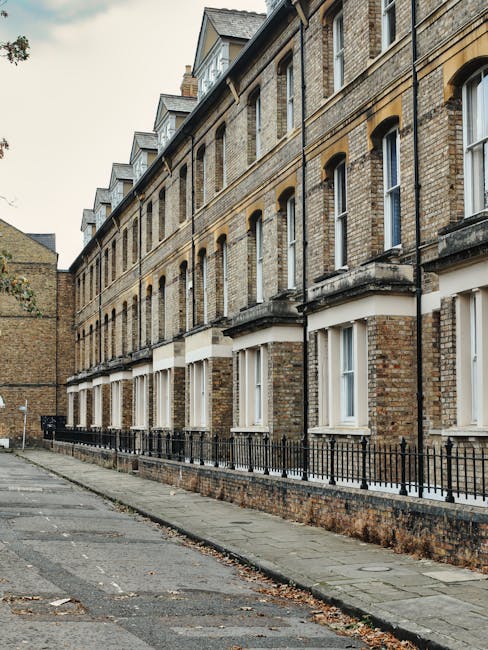
![The image depicts the exterior of a multi-storey residential building with red brick walls and several windows, some of which have white frames and are open. The building has a sloped red tile roof with dormer windows, and tall brick chimneys extend from the roof. In front of the building, on the sidewalk, two individuals are walking away from the camera, dressed in casual clothing. Shadows of leafless trees are cast onto the building's facade. A section of a loading area or pavement is visible at the base of the building, bordered by yellow markings indicating parking or loading zones. The sky is mostly clear with some clouds, and part of a blue construction crane is visible in the upper right corner. The scene suggests a typical urban residential area, with the presence of [COMPANY_NAME] and the context of home relocation or furniture transport implied by the surroundings.](/pub/blogphoto/clapham-old-town-estate-removals-checklist-for-flats2.jpg)
Common Mistakes to Avoid
Most moving problems are not dramatic. They are just preventable. That is the annoying part.
- Leaving packing too late: The final night becomes a mess of mixed items and weak tape.
- Forgetting building permissions: Some estates are strict about access and loading times.
- Not measuring furniture: This leads to awkward last-minute dismantling or blocked corridors.
- Ignoring parking realities: A van cannot magically appear in a restricted spot without consequences.
- Overfilling boxes: Books and kitchenware get heavy fast.
- Not separating essentials: It is never fun to search for a phone charger in a box marked "misc."
Another common mistake is underestimating how long the property handover will take. Even a simple move-out can involve final cleaning, meter notes, key returns, and a quick property scan. If you are leaving a flat in a large estate, allow more time than you think you need. That extra half-hour can feel like a miracle.
Tools, Resources and Recommendations
You do not need specialist equipment for every move, but a few tools make the process much easier.
- Strong boxes in mixed sizes: Small boxes for books, medium boxes for general items, larger ones for light soft goods.
- Packing tape and marker pens: Plain essentials, but absolutely non-negotiable.
- Bubble wrap or paper: For mirrors, glassware, and fragile decor.
- Furniture covers and blankets: Useful for protecting corners and surfaces.
- Door stoppers and a basic toolkit: Handy when dismantling furniture or holding doors open during loading.
- A simple spreadsheet or notes app: Ideal for tracking rooms, box counts, and completion tasks.
For broader help, you may want to review the company's services overview and about us pages so you understand the support available before you book. If you are comparing different move types, the house removals Clapham and storage Clapham pages can also help you think through whether your flat move needs temporary holding space.
For readers who like to plan in layers, it can also be helpful to read about local moving context in the Clapham Common removals guide and the Clapham North to Clapham South route guide. They offer a useful sense of how local moves tend to work in practice.
Law, Compliance, Standards, or Best Practice
Flat removals do not usually involve complicated legal procedure for the mover, but there are still important standards and normal UK expectations to keep in mind. The exact details depend on your lease, tenancy, estate rules, and the removal provider you choose.
Common best practices include:
- giving proper notice to building management where required;
- using agreed access routes rather than trying to improvise;
- protecting communal areas from knocks, dirt, or damage;
- checking that fragile or valuable belongings are packed safely;
- ensuring anyone helping with lifting is able to do so safely.
If a provider is helping with your move, it is sensible to understand how they handle risk, handling procedures, and public liability expectations. The insurance and safety and health and safety policy pages are useful for that kind of due diligence. It is also wise to review terms and conditions so you know what is included and what is not.
For anyone moving rented property, keep your inventory, check-out expectations, and deposit-related paperwork in order. That is not legal advice, just sensible housekeeping. Truth be told, a tidy paper trail makes life easier if anything needs to be clarified later.
Options, Methods, or Comparison Table
Different flat moves need different levels of support. The right choice depends on access, volume, distance, and how much you want to do yourself.
| Option | Best for | Strengths | Watch-outs |
|---|---|---|---|
| Full removal service | Larger flat moves, heavier furniture, busy schedules | Less lifting, more coordination, easier on moving day | Usually the most involved option, so plan early |
| Man and van | Smaller flats, fewer items, local moves | Flexible, practical, often ideal for short-distance jobs | You may need to do more packing and loading prep yourself |
| Self-managed move | Very small moves or people with a lot of help | More control and sometimes lower cost | More tiring, more risk of delay, and more lifting responsibility |
| Storage-first move | Delayed completion, downsizing, or renovation gaps | Creates breathing room between addresses | Requires extra planning and possibly a second transport step |
If your flat has tight stair access or several bulky items, a professional setup is often the least stressful route. If it is a small studio and you are moving locally, a simpler arrangement may be enough. The trick is to match the method to the real job, not the ideal version you wish you had.
Case Study or Real-World Example
Here's a realistic example. A tenant in a Clapham Old Town mansion block was moving out of a two-bedroom flat on a Friday morning. On paper, it looked straightforward. In reality, there was a lift booking, a limited loading window, two wardrobes that needed dismantling, a bike store key to return, and one neighbour who really, really liked to use the communal entrance just when the boxes started moving.
What made the move work was not luck. It was preparation. The tenant had packed essentials separately, confirmed access with building management, measured the larger furniture, and arranged the van arrival after the keys were available. By the time the removal team arrived, there was a clear route from flat to exit, the lift was protected, and the move stayed tidy.
The interesting bit was how little drama there was. No frantic calls. No missing boxes. No last-minute hunt for the airing cupboard contents. The move still took effort, of course, but it felt manageable. That is exactly what a good checklist is meant to do: not remove the work, just remove the chaos.
Practical Checklist
Use this as your working Clapham Old Town estate removals checklist for flats. Print it, copy it into your notes app, or tick it off by hand. Whatever works.
- Confirm moving date and time window
- Check lease, tenancy, or estate rules
- Book lift access or notify building management if needed
- Arrange parking or loading access
- Measure large furniture and tricky corners
- Choose packing materials and gather boxes
- Label boxes clearly by room and priority
- Pack essentials separately
- Set aside valuables and key documents
- Disassemble furniture where required
- Protect fragile items and surfaces
- Notify landlord, agent, or neighbours if appropriate
- Back up important digital files
- Take final meter readings where relevant
- Do a final sweep of cupboards, shelves, and storage spaces
- Return keys, fobs, and access cards
- Confirm nothing is left behind in storage cages or communal areas
Expert summary: if you do nothing else, focus on access, packing order, and building rules. Those three things solve a surprising number of moving-day headaches. The rest is mostly details, and details are easier to handle when the big pieces are already under control.
Get a free quote today and see how much you can save.
Conclusion
A flat move in Clapham Old Town does not need to feel like a race against the clock. With a proper removals checklist, you can stay ahead of the tricky parts: access, packing, building rules, timing, and the last few jobs that always seem to appear at the end. The checklist gives structure, but it also gives you breathing space. And in a London move, that matters more than people admit.
If you are moving from a flat in a managed estate, a conversion, or a block with tight access, treat the checklist as part of the move itself, not an optional extra. It keeps the day calmer, the property safer, and your head far less cluttered. That alone is worth it.
And when the final box is in, the kettle is unpacked, and the old flat is empty in that echoey, slightly odd way only flats can be, you'll be glad you planned properly. Small win, but a real one.